
Three completely different leaders. Three completely different experiments. And yet underneath all three, the same capability was being asked of them.
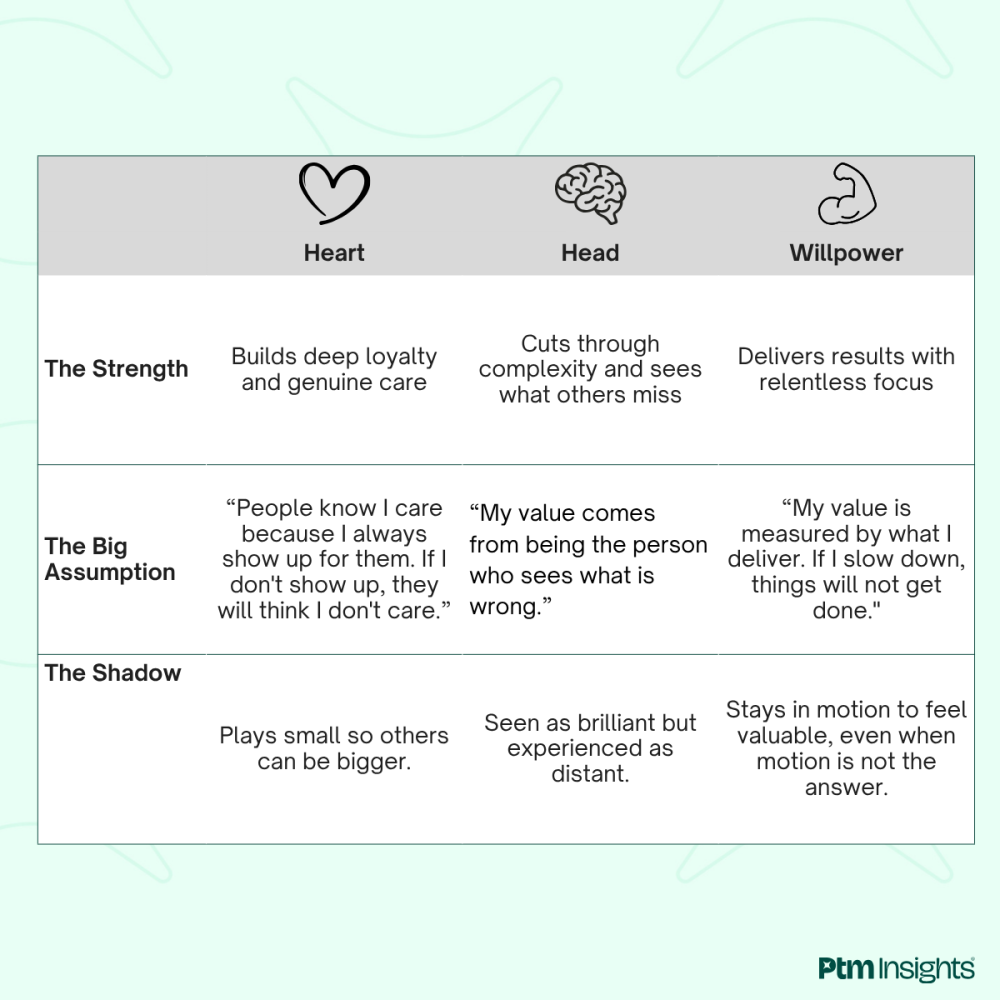
Most leaders are not purely one type. These three patterns (the relentless driver, the ever-available carer, the expert who always has the answer) are reactive tendencies that exist in all of us to varying degrees. Under pressure, most people lean more heavily into one. But you may have recognized yourself in two, or even all three. That is not a problem. It is actually useful information about where your development edge might be.
Not weakness. Not oversharing. Not an invitation to become emotional in a meeting.
Vulnerability is the willingness to be seen genuinely and honestly (as you actually are) rather than as the version of yourself that feels safe to present.
Patrick Lencioni, whose Five Behaviors of a Cohesive Team framework many leaders will recognize, calls it vulnerability-based trust. The foundation of every high-performing team. Not trust built through competence or track record, but trust built through the willingness to say "I do not know," "I got that wrong," or "here is what I actually think."
That kind of trust cannot be faked. And it cannot be built without vulnerability.
The Willpower leader finds vulnerability difficult because being seen as uncertain threatens the identity they have built around delivering and being indispensable. The experiment asked them to slow down and focus, which already felt uncomfortable. Admitting they do not have all the answers feels even more so.
The Heart leader finds vulnerability difficult because being truly known (rather than just liked and needed) feels risky. They have learned that their place in the relationship depends on being available and accommodating. Showing up fully as themselves, with real opinions and real limits, requires a courage their default pattern was specifically designed to avoid.
The Head leader finds vulnerability difficult because intellectual and emotional exposure threatens the credibility they have built around being right. Sharing thinking before it is fully formed and defended... being genuinely uncertain in public... not having the final word. Each of these requires a specific kind of courage that their protective pattern was designed to prevent.
Same difficulty. Completely different logic underneath. And the same quiet cost: a version of leadership that is competent and capable, but not fully trusted or truly known.
The High Impact 90 asked the Willpower leader to stop performing productivity and be honest about what truly matters. The question before saying yes asked the Heart leader to stop performing availability and be honest about what they actually need. The question before sharing insight asked the Head leader to stop performing certainty and be genuinely curious.
In each case the experiment was not really about the behavior. It was about what the behavior was protecting. And what it would mean to lead without that protection.
That is vulnerability. And it turns out to be the foundation of everything most leaders say they want: real trust, genuine influence, and teams that bring their best thinking.
This article closes the Leadership X-Ray experiment series. But it opens something new.
Vulnerability deserves more than a closing paragraph. It is one of the most important and most underinvested leadership capabilities I see: across every kind of leader, every culture, and every level of seniority. In the next series I will go deeper: what vulnerability actually looks like in practice, why it is worth developing deliberately, and what gets in the way.
If any part of this series has resonated, I would love to hear from you in the comments.
And if you are ready to explore what your own Leadership X-Ray might reveal, reach out at diane@ptminsights.com.