
Most off-sites fail. Not on the day. In the three weeks after.
The day itself goes well. People connect, they open up, they leave inspired and full of commitments. But then, the day-to-day swallows all of it, and by the following month the team is right back where it started.
This is not because people stopped caring. It is because excitement is not a plan. The daily work pulls everyone back and good intentions do not survive it.
Here is the mistake I see most. Leaders pour everything into designing the offsite and plan nothing for what comes after.
Offsites always run out of time, so the follow-through conversation, the one about what we actually do on Monday, is the first thing cut. Everyone goes home, and there is no post-mortem, no time blocked to lead the actions, no structure waiting to catch the momentum.
So I started treating the after as part of the design. I reserved time at the end of the day for it. I blocked my own time to lead the follow-through. And I built light structures to hold the energy, then handed as many as I could to the team.
Excitement is not a plan.
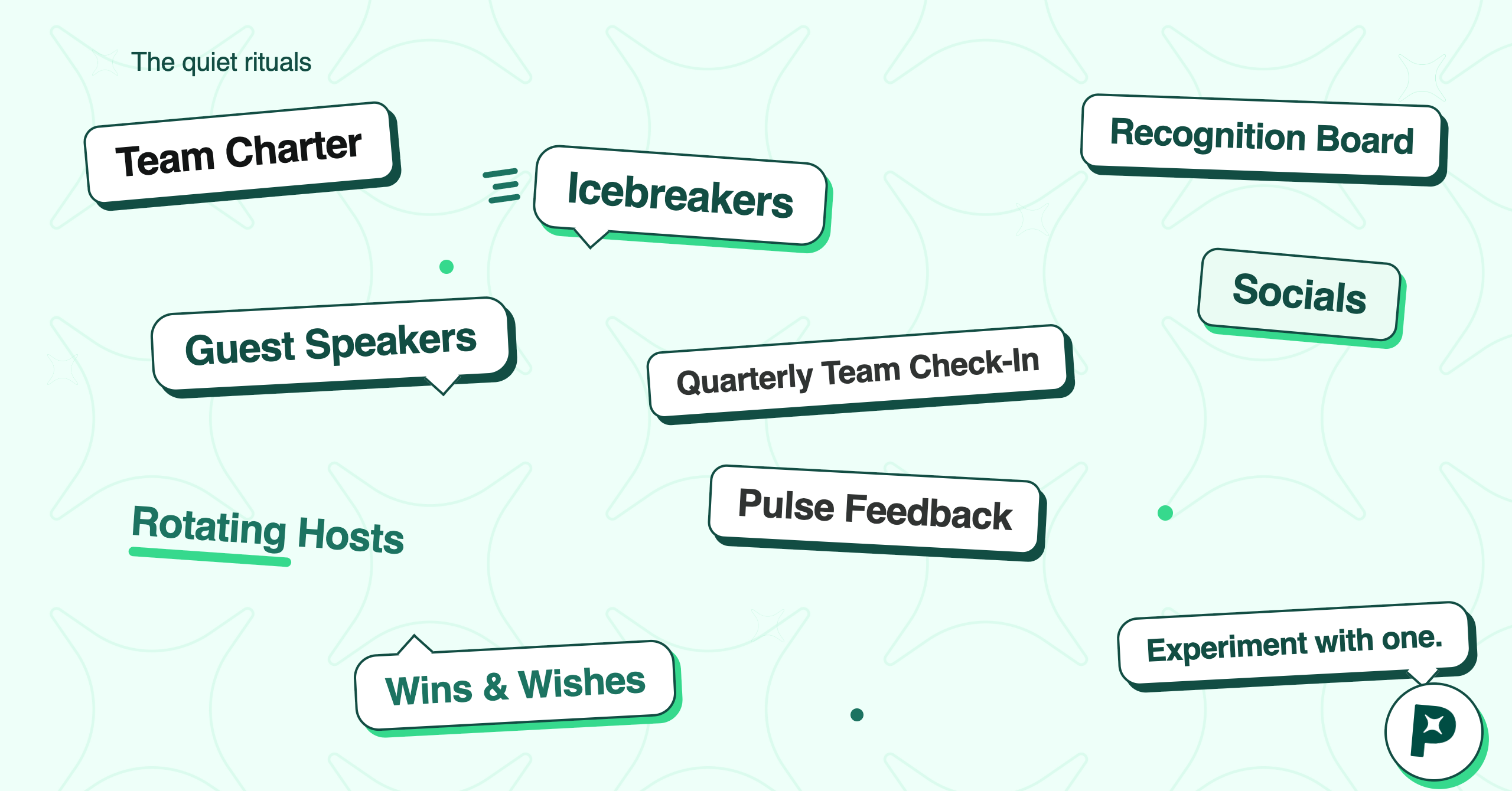
We took the monthly gathering we already had and made it theirs. Two people hosted each month and owned the agenda. We added a short guest speaker from elsewhere in the business, which came from the team, they had said they wanted to feel closer to the wider company. Once a quarter, everyone put one win and one wish on a shared slide.
The point was not the format. It was that they ran it, so it did not depend on me to stay alive.
The recognition board started because people felt under-valued, like no one noticed their work. I wanted them to learn to be proud of themselves without waiting for someone above to say it.
At first it was empty. So I filled it. Every Friday I would go to the board, reflect on the week, and put up post-its, trying to cover each person. I also nudged people privately, the ones sitting on a win I knew about but who felt that posting it themselves would look like showing off.
Then it shifted. Someone would put their own win up, "I closed five offers this week," and others (not me) would say,
"Wait, you did what, that's fantastic".
And you could see the relief. They had not come across as a show-off. It was allowed. So they did it again.
Slowly it filled on its own. People from other teams even walked past, noticed, and realized this group was doing something together.
None of it was heavy. That was the point. The team came to feel how energizing it is to be connected, and also that without a little structure, we would quietly slide back into old habits.
So here is the one worth sitting with:
What actually happens to your team the week after the offsite?
If the honest answer is "nothing planned," that is not a small gap. That is where the whole thing is won or lost.
Designing what comes after an offsite, and the quiet rituals that keep a team connected, is some of my favorite work. If this has sparked some curiosity, I would love to continue the conversation at diane@ptminsights.com.