
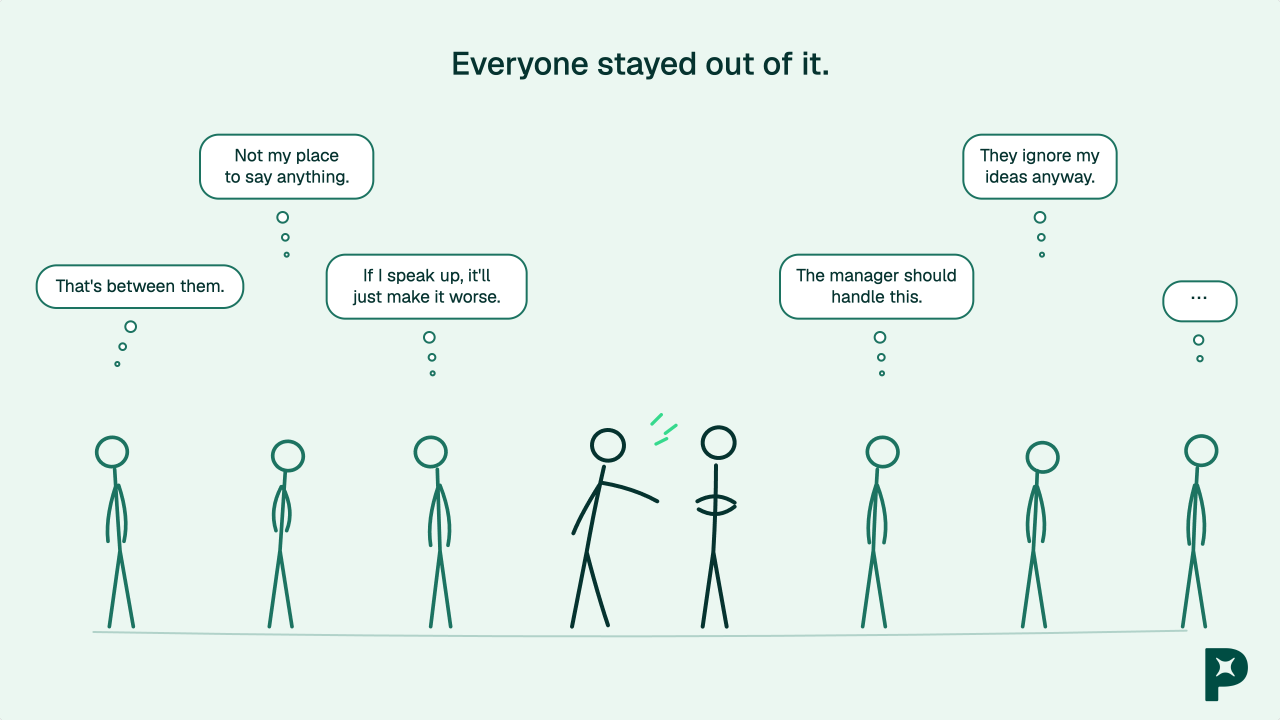
Most advice on handling conflict is about the two people in it. How to respond when someone criticizes you, how not to get defensive, how to stay curious. Gottman and the Crucial Conversations work are excellent on this.
But a team is not two people; A team is everyone in the room, and most of the room is usually watching.
Here is the uncomfortable part. On a team, watching is a form of participating. When two people clash and everyone else stays quiet, the silence is not neutral. It tells the person being piled on that no one has their back. It tells the other person the behavior is fine. It tells the room what this team tolerates. Inaction is an action.
We are very good at staying out of it, and we have reasons that sound fair.
The team changes when one person (perhaps, you?) stops waiting for everyone else to change first.
Each of these is a way of standing outside a system you are fully inside.
I have watched a leadership team complain that nothing ever changes, while every person in the room had not changed a thing about how they showed up. They were describing the team as if it were something happening to them. But there is no version of the team that does not include you. Your silence, your conditions, your own sameness, that is not you observing the problem. That is you being part of it.
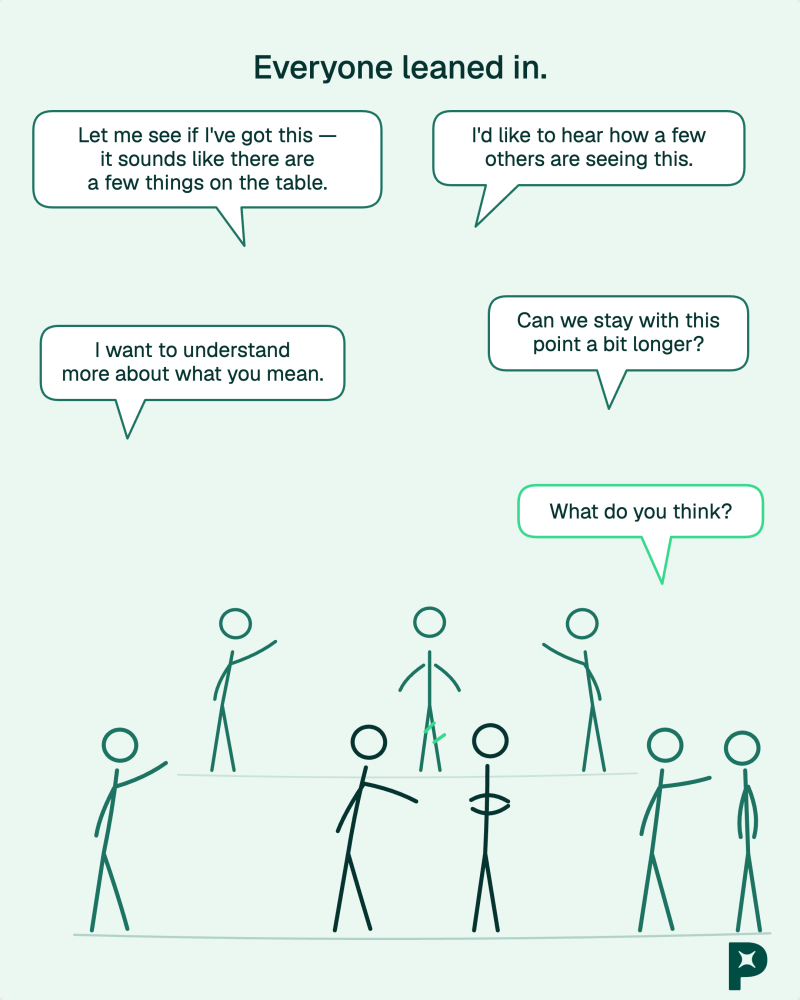
Here is the good news, and it is genuinely good news. You do not need authority, a meeting, or a hard confrontation to change any of this. Because a team takes its cue from itself, one person's small move resets what the whole room believes is acceptable. You are not trying to change a person. You are shifting a norm, and that takes far less than you think.
Two moves, both small enough to do in the next conversation.
I worked with a team once where a leader put it simply: "When you do not understand something, ask." Do not just say "yeah, I hear you" when you actually do not, or when you are missing half the details. Find out more, before the confusion hardens into something worse. So stop waiting for the team, the leader, or the other person to change. Ask what one small thing you will do the next time you are in the room.
On a team, the smallest thing is never small. One question, one pause, one person choosing to engage, and the whole room can shift.
If this has sparked some curiosity, I would love to continue the conversation at diane@ptminsights.com.